

In 2026, as the nation celebrates the 250th anniversary of America’s founding, SPN is expanding the Ed-Prize with a special focus on the principles that have shaped our country. This year, the Civics Prize joins the Ed-Prize as a complementary award—highlighting organizations that strengthen civic understanding while driving innovative education solutions across the country.
The 2026 Ed-Prize continues to spotlight bold, scalable innovations that improve K–12 education—whether in microschools, charter and district schools, or homeschool environments.
The new 2026 Civics Prize honors organizations addressing gaps in civic literacy and helping students understand the rights, responsibilities, and institutions that form America’s system of self-government.
Together, these prizes celebrate not only transformative learning models, but also the civic foundations that make education—and opportunity—possible in a free society. As America marks 250 years, the Ed-Prize and Civics Prize recognize projects that prepare the next generation to learn, lead, and thrive.
First-round applications for 2026 have closed.
Apply for the investment you need to create a brighter future for American families and students.

What We’re Looking For
Whether you’re applying for the Ed-Prize or the Civics Prize, the strongest proposals share three essential elements:
A clear problem
An innovative solution
Evidence of real or potential impact.
Both prizes support nonprofit organizations developing replicable models that improve student learning or strengthen civic understanding. Each prize has its own focus area, outlined below.
Ed-Prize: Advancing Education Innovation
Identify a specific challenge facing K–12 education and present a compelling solution that meaningfully improves teaching, learning, or school operations.
We’re especially interested in solutions that:
Address barriers preventing innovative education models from scaling
Demonstrate potential to grow beyond one school or community
Offer insights that inform or accelerate policy improvements
Advance innovation inside district schools or help alternative models reach more students
Civics Prize: Strengthening Civic Literacy
Identify a specific gap in civic knowledge or understanding of America’s system of self-government and present an engaging, accessible solution for students or educators.
We’re especially interested in solutions that:
Use creative tools—curriculum, digital media, professional development, or community programs
Make civics relevant, age-appropriate, and connected to real life
Strengthen appreciation for America’s institutions and responsibilities of citizenship
The strongest applications—whether for education innovation or civic literacy—tell a compelling story:
A clearly defined challenge
A creative, meaningful solution
A capable team ready to execute
Evidence that the approach works—or will work—and can scale
These are the projects with the power to transform learning, strengthen civic understanding, and shape the future of education and civil society.
-
Ed-Prize recognizes and accelerates innovative, forward-thinking projects that offer creative solutions to current and future K-12 challenges.
The prize is awarded annually to projects that support State Policy Network’s vision of a future where all children have the chance to pursue an education in an environment where they can thrive.
The Civics Prize, offered as part of SPN’s Ed-Prize, recognizes and accelerates innovative, forward-thinking projects that strengthen civic literacy and understanding of America’s system of self-government among K–12 students.
The prize is awarded annually to projects that support State Policy Network’s vision of a future where all young people are prepared to engage thoughtfully in citizenship and civic life, with a strong understanding of their rights, responsibilities, and the institutions that sustain a free society.
Grant award amounts range from $20,000 to $75,000 for Ed Prize and $20,000 to $60,000 for Civics Prize. Winners meet with SPN staff quarterly to report on progress during the 12-month period of the grant.
Winners are recognized at SPN’s Annual Meeting where, in 2025, more than 1,500 leaders from 500 organizations and 50 states gathered. Any applicant who offers a promising solution may be connected to our nationwide Network where solutions can be expanded to communities across the country.
-
State Policy Network invites community leaders, non-profits, state-based think tanks, and national organizations to identify the most promising approaches to the challenges our communities face. We work with our members to refine and improve these approaches, then to test the best ideas on the ground. This advances our Network’s efforts to improve education outcomes through better public policy.
The purpose of the prizes is to identify, reward, and connect the most creative and enthusiastic education entrepreneurs in the United States to our Network. The prizes support and accelerate entrepreneurs in their work and learning about innovative education solutions in action across the country strengthens our Network.
-
Our vision is rooted in the following guiding principles:
Empowering Parents: Parents and guardians are the rightful decision-makers in their child’s education. Our Network advances policies that provide parents and guardians the freedom to choose the educational environment that best serves the unique needs of their child and aligns with their values and beliefs. Parents have options—not limited by ZIP code or income—and exercise those options.
Decentralizing Education: We strive for a system that minimizes bureaucracy by authorizing local communities to advocate for bottom-up solutions to local problems. By decentralizing education, we aim to increase flexibility and responsiveness to the diverse preferences of students and their families.
Unbundling: We affirm that education “unbundled” fosters innovation and a culture of continuous, incremental improvement. We support policies that not only permit but promote pluralism. We commit to champion this not only because we inherently value it, but because we surmise the availability of more high-quality options in the education marketplace will result in improved academic outcomes.
Personalizing Learning: Each child is an individual with distinct strengths, struggles, and learning styles. We endorse a varied range of teaching models, methods, and curricula to accommodate these differences, prioritizing student success over preserving the status quo.
Protecting Freedom of Thought: We stand for intellectual freedom. Children should be taught how to think, not what to think. We encourage educators and students to engage in open dialogue, explore different perspectives, and challenge ideas without fear of censorship or indoctrination.
Responsibility: We expect transparent and accountable stewardship of public dollars in education spending. We advocate on behalf of all stakeholders in America’s K-12 education ecosystem: students, parents and guardians, educators, and taxpayers.
Joyful, Lifelong Learning: Education does not begin or end with schooling. We seek K-12 learning environments that spark curiosity and a true love of learning. This recognizes the importance of openness to growth and the desire for unabating education and skill development—beyond the classroom, college, or career—but throughout an individual’s life.
-
Ed-Prize has been made possible through the generous support of sponsors. Past sponsors of Ed-Prize include The Challenge Foundation, Rupe Foundation, Stand Together Trust, and Walton Family Foundation.
Civics Prize is made possible through the generous support of the Daniels Fund
Refer a Candidate
Do you know an individual or organization who may benefit from learning more about SPN’s Ed-Prize and opportunities?
"I'm a former public school teacher and principal. Winning Ed-Prize was a boost of confidence. We're all trying to help students reach their potential.
~Jon England, Libertas Institute
Eligibility, Process & Awards
Eligibility
These highly competitive grant programs are open to non-profits with a 501(c)(3) designation. SPN members with eligible projects are encouraged to apply, but applicants are not required to be SPN members to submit applications or compete.
SPN will not accept or consider Ed-Prize applications for:
School choice policy initiatives. If your organization is involved in advancing school choice policy initiatives and you would like to discuss opportunities for collaboration, please email the application contact (listed below).
General operating support of alternative schools. Applications from alternative schools are welcome but should be project-based (i.e., have a beginning and end date [even if that date falls beyond the term of this grant] as well as clear success metrics). Applicants invited to the second round will be required to submit an itemized budget and indicators of success for the funded project.
Application Process
The competition occurs in two rounds:
A first round that includes a short application soliciting basic information. 2026 Applications open March 16 and must be submitted by April 12.
A second, invitation-only second round follows the first round, and requires a more detailed application.
Applications will be welcomed via online form submission. Hard copies or proposals submitted via email will not be accepted.
All applicants will be asked to provide:
Organizational information, including confirmation and documentation that your organization is a recognized 501(c)(3) non-profit.
An executive summary (100 words or less) of your project
An explanation of why you are applying for Ed-Prize or Civics Prize that includes:
-An explanation of how the applicant’s work is innovative.
-An explanation of how success will be measured.
Those who are invited to the second, full application cycle must also provide additional detail about their projects, including (but not limited to):
Project outline and budget, including goals and projected impact, and how requested funds will be used over the following year.
A five-minute video of team members explaining why the organization is applying for Ed-Prize or Civics Prize.
Second round applications undergo a rigorous vetting process that includes external judges.
Only a small number of projects will be selected to receive a grant award. In the past, Ed Prizes awarded have ranged annually from two to four prizes. In the inaugural year of the Civics Prize, we anticipate awarding between one to three prizes.
Additional Benefits
In the past, strong applicants have benefited from other opportunities even if they did not ultimately win Ed-Prize. Applicants of interest may receive support and resources including:
Invitations to participate in Accelerator Workshops.
Information or invitations to other grant opportunities
Training and workshop opportunities
Invitations to education events, briefings, and networking
SPN wants to know about your work.
Applying may qualify you for these additional benefits.


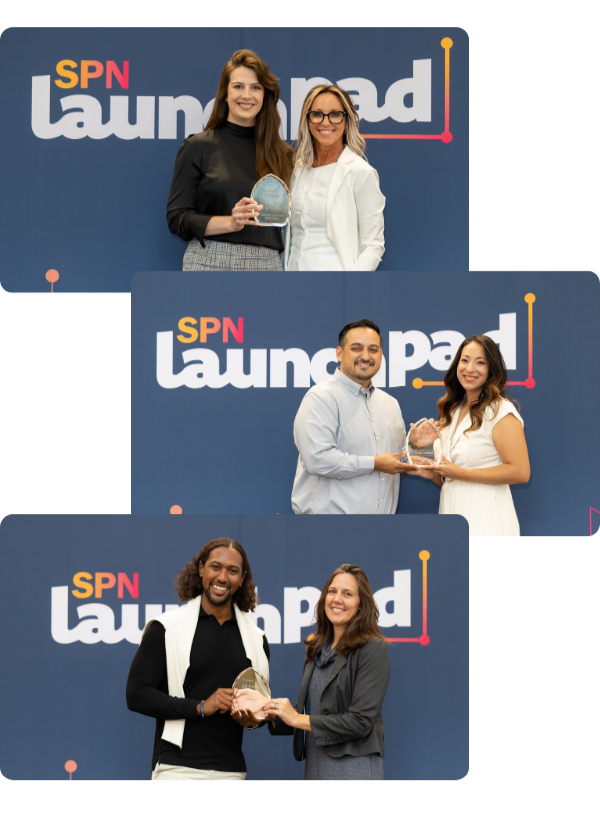
Meet Our Recent Winners
-
![]()
American Experiment North Dakota - 2025
American Experiment North Dakota is building support for charter schools, reaching nearly 200,000 residents in 2025.
-
![]()
California Microschool Collective - 2025
The California Microschool Collective is building a national network of microschool leaders united by shared vision and tools.
-
![]()
Outschool.org - 2025
Outschool.org is expanding ESA navigation tools to help families discover and enroll in public school services alongside nontraditional options.
-
![2024 Ed-Prize Winner: Eight Million Stories]()
Eight Million Stories - 2024
The Eight Million Stories ED project supplements Houston ISD’s current approach to serving students who have dropped out of school or are at risk of dropping out
-
![2024 Ed-Prize Winner: Libertas Network]()
Libertas Institute - 2024
The Education Innovators Association supports microschool founders and other education innovators in overcoming Utah’s regulatory barriers.
-
![2024 Ed-Prize Winner: Love Your School]()
Love Your School - 2024
The Parent Concierge Service ensures even more Arizona parents are empowered to make the best education decisions for their children.


Application Contact
We appreciate your interest in Ed-Prize, and we look forward to receiving your application. Because of the interest in Ed-Prize and the number of requests we receive, we are not able to speak with applicants one-on-one during the first round.
Please contact us via this form. Requests for calls during the first round will be declined, though clarifying questions can be submitted via email and we will do our best to respond in a timely manner.